Showing posts with label writing. Show all posts

Weekly Teatime

Wednesday, January 22, 2014
I feel like these weekly check-ins are working well. The pressures off on trying to get blog content up as frequently as humanly possible (even if I haven't really got much to say) and it feels a bit as though we have a teatime scheduled in wherein I have a cup of tea and then proceed to have a very one sided conversation about the week gone by. Fun, no?


I've been writing a lot (actual, physical writing), which means I have a lovely case of "left-handers" on my knuckles on any given day. I'm juggling several projects at the moment and I (happily!) received lots of "go-aheads" from queries I sent out at the start of the month. Deadlines are coming fast and furious, one right after the other. I have to remind myself that nothing everything needs to happen all at once. It will all be okay if I just focus on what needs to get done today and let tomorrow take care of itself.

I made the worst cookies of my life on Saturday. At least I wasn't expecting them to be amazing (I was trying them out to see if they could accompany an article I'm working on), but I also wasn't expecting them to be so, so horrid. Let this be a lesson - a cookie recipe must white flour, white sugar, and butter. Any omissions from that list and it just tastes like sadness.
 
A good friend is getting married in June and this past week I ordered the bridesmaid dress, as well downloaded the pattern for the afghan I'll knit for her and ordered the afghan yarn. I feel so on top of things. Now I just have to hope the dress actually fits (although there's plenty of time to exchange it), find me some pretty silver shoes, oh and actually knit the afghan. But June is still a long ways off, right?

Speaking of marriage and babies and all the other major life milestones that I am failing at just 100%, has anyone else stumbled across this British ad campaign trying to get women to have babies when they're younger? Le sigh. So much could be said about this, but in general, let me just say "Aaaaaarrrrrgh."

I'm almost done with the current writing WIP. That's right: I put the first tentative words in a Word doc. on November 24 and now, a mere two months later, I'm almost done. Wait, what is that noise? Angels singing?

We just got out of Internet jail yesterday. Whenever we exceed a certain download cap, our internet service gets slowed down considerably until our internet usage falls within a certain percentage of allotted bandwidth. (The system makes about as much sense as that last sentence.) Our internet went out on January 3rd and just came back today. The really sad part? The last date that we were released from internet jail was December 22. I do not want to do the math on that one.


We set out the remains of the Christmas turkey once I'd boiled it down for stock the day after Christmas. I planned to throw it out after a couple days of letting the pine marten and birds pick at it, but here it is, nearly a month later and the birds are still finding eating off of it. It just struck me that I've been spending all this time watching birds peck at one of their own. Kind of pervy, really.

I have a big expense dentist appointment on Thursday to permanently fix my front teeth which have been giving me grief since 2011. Call it vanity if you must, but it's really only funny for so long to have "Ada the Brown Tooth" be your Game of Thrones bandit name.


Lake trout season outside of the Boundary Waters opened on Saturday and Andy says we're off to fish on Friday.

 
Read more ...

A Good American: a book review

Thursday, February 21, 2013
I wanted A Good American by Alex George to be a good book. I really did. 

I wanted beautifully stark prose ala Willa Cather's My Antonia, which I use as my standard for novels set in the Midwest. I wanted funny, yet truthful, glimpses into the intricacies of everyday life (like L.M. Montgomery does so well in her Anne books) of a German immigrant family in Missouri. I wanted a novel that held its own among other recent historical fiction releases such as The Help or The Chaperone.

You can't always get what you want. 

The story holds incredible potential. George tackles an epic story of a German couple, Frederick and Jette Meisenheimer, forced to leave Hanover after Jette's parents disapprove of their relationship.  They take the first boat to America, which lands them in New Orleans. From there, they head north to Missouri where they fall in with a German immigrant community. The book follows the story of Meisenheimers for three generations, documenting numerous tragedies, a bit of everyday life, and the changing times. 

George is an attorney by trade, and he breaks the very first rule of fiction writing - show, don't tell - over and over again. He overuses narration and skimps on dialogue.The most important scenes are summarized rather than shown. The result is cardboard cutouts of characters. George is so busy telling you what the characters are like, that the reader never gets a chance to form a personal connection with them.  

For all the people that George thanks in the acknowledgement section of the book for helping him with the novel, it seems like at one of those early readers could have casually suggested that George try writing the book using active voice rather than dull, dull, dull passive voice, thus saving him from the introverted wrath of English majors the world over. I knew I might be in semantic hell with this book as soon as I read this sentence on the book's inside flap: "It’s where his German grandparents—Frederick and Jette—found themselves after journeying across the turbulent Atlantic, fording the flood-swollen Mississippi, and being brought to a sudden halt by the broken water of the pregnant Jette." Couldn't we just say "Jette's water broke?"    
 
I know I'm all down on the prose of this book, but really, the book is quite readable and probably even more readable if you don't give a fig about sentence structure. It's an interesting story, poorly told. There's just no sparkle in George's storytelling, nothing that allows the story to leap off the pages into your own imagination. Unfortunately,  A Good American missed the long, hard edits it needed to make it a stand out piece of Americana literature.  

You can find more information and join the discussions about A Good American over at the BlogHer Book Club.

 
Disclosure: I participated in this review for the BlogHer Book Club. I was compensated for my time and received a complimentary copy of the book. However, all opinions expressed in the review are my own.
Read more ...

Creative Writing, Or What Bike Are You Riding?

Tuesday, February 5, 2013
The issue with telling everyone that you're a writer is that suddenly everyone starts holding you accountable to your "writerly" claims, even if that isn't their intention.

This winter I've had countless conversations like this:

Other person: So how's your winter going?
Me: Good. Really busy, but good.
Other person: Doing lots of writing?
Me: Erm . . . yes. No. Kind of. Well . . . I've been busy.

Sure I've been writing this winter. Article assignments. Radio scripts. Naturalist guides. Marketing plans. Blog posts.

My everyday paying work has me writing a lot, but for whatever reason, when people ask if I've been writing, my initial gut reaction is "No." My freelance business revolves around writing and that little business has been doing quite well for itself this winter. The assignments get written, the invoices go out, the checks come in.

But when people ask if I've been writing, my mind always jumps to the creative realm  and if you're asking if I've been writing creatively, the answer is a resounding "No!" I've been furiously pedaling my business writing bike at what can sometimes feel like a scary speed, while my creative writing bike gathers dust out back.

bicycleIn my mind, my business writing bike is a rather dull mountain bike that defies description. It's useful, it's hard working, and it ensures you keep making regular contributions to your IRA. My dusty creative writing bike on the other hand is painted shades of pink and purple, has a banana seat and a plastic basket in front studded with pink and purple plastic flowers. It's not exactly sexy, but it's a good mood elevator, if nothing else.

In the early days of this blog, I wrote a lot about the novel I was in the process of rewriting. In the end, the novel got edited, queried around to literary agents, received the teensiest of teeny weeny nibbles from a couple literary agents, and now lives, neglected, on my hard drive. In the end, I realized even if the novel's writing was decent enough, the plot needed a major overhaul before the manuscript should make any more rounds in the literary agent circle and that even then, I might not have a strong enough story for publication. That's okay. But just as the sun set on that literary goal, right when I should have been making some new creative writing goals, I started to get busy with article assignments and other work obligations.  

When I was down in the Cities last month, I discovered a couple copies of my college's annual literary and artistic journal from the years we attended college on her bookshelf. I leafed through pages, wondering what I'd submitted, and discovered the stuff I'd gotten published really wasn't half bad. Not award winning literature, for sure, but still, not too shabby. As I read through some of my old poems and essays, I found myself missing how my brain feels when it's working to find just the right word for a poem.

For a few years after graduation, I still had submissions for that literary and artistic journal (which accepts submissions from alums) each year. But this year will be the second year in a row where I have nothing to submit. Nada. Nary a poem or short story in sight.   

It's so easy to let our creative writing go as we move firmly into adulthood. Poems, short stories, and essays in general don't generate much income. They're also greedy little buggers, demanding so much of our time and brain power if they're going to be any good. And so instead we opt for the billable hours. We shove the novel drafts in the proverbial bottom drawer and tell ourselves that we'll work on it next. Next year. Next year. 

They say that getting back into writing is just like riding a bike. And every once in a while, we have to ask ourselves, which bike are we riding? Even if there's not time to ride my creative writing bike all day, every day, doesn't it deserve to be taken for a spin every once in a while? How will I write a published  novel if the bike's collecting dust in the corner month after month? How can Judd Apatow produce my screen play if I never write it?

 2013 has proven to be a year of resolve and determination this year thus far. Now, as I eye that forgotten, but still lovely bike, I wonder, is it worth it? What if it has a flat tire and doesn't work properly at first? Will it just be another thing to feel guilty about not doing if I make some bold resolution to write 500 words a day or for half an hour each morning?

I don't know the answers. I just know I miss it.
 
Read more ...

Breaking Through Writer's Block - a guest post from Rose

Thursday, January 24, 2013
Today I have a guest post for you from creative midwife, and my former neighbor, Rose Arrowsmith DeCoux. We're doing a blog post swap today, so you can read my post - about living seasonally - over at her blog, Rose Arrowsmith DeCoux. We hope these posts spark your creativity on these cold (Cold!) January days. Also, Rose is leading a retreat for writers and artists at the camp just around the corner on my lake on Feb. 1-3. So if you want to check out my neck of the woods in the middle of winter, consider attending!

You have stories to tell, but…sometimes you get stuck. Nothing comes out. You don’t know where or how to start.

First, let me say that everyone, everyone experiences this. It’s nothing to feel ashamed of or waste time worrying over. And it’s really simple to fix.

Here’s how you open up the clogged creative channel and get those stories flowing.


Low to Mid-Grade Writer’s Block

When you just need a nudge.


Think of writing like running.

When I haven’t run in a long time, the first few jogs feel… terrible! I feel ill. My lungs burn. My feet are slow and clunky. I ask myself over and over, in cadence with my breath, Why this was a good idea? How is this getting me anywhere?

Then I’m sore, and I don’t really want to do it again.

But when I do, and when I do it for a week… that sick feeling goes away. I may not be that fast. I often still pout and fuss a bit about starting, but the resistence diminishes.
And there are even days when the run is glorious. When I don’t put it off, when I look forward to it.
As I go out more and more, I start to build up evidence that This is going somewhere. I accumulate enough “good” runs that I stop being stopped by the Inner Critic who tells me It’s not worth it.

Julia Cameron (The Artist’s Way, The Right to Write) says we must put in the slow miles as writers just as runners do. Keep the hand moving. Keep the words clicking across the screen. Putting in time today, even just 10 minutes, will keep the momentum and make it easier tomorrow.

The solution for Low- to Mid-Grade Writer’s Block: START.
Easy, right? *wink, wink*

High to Red-Alert Writer’s Block:

When you need a life-line


But what if you can’t even get started? What if there is some serious sewage backed up and you have writer’s block so badly it feels like the dry heaves?

I felt that way this summer.

I had come back from a really hard year living in India, and had started a (really hard) job managing a hotel. Oh, and I was trying to keep on liking my husband and our 2-and-a-half-year-old. 
I had undergone so much change that I wanted to find a peice of myself that was familiar, creative, safe. I wanted to write, because a lifetime ago, I had written stories and poems. It had been easy, once.
But I just felt tired. I felt exhausted. And I felt overwhelmed by how to start. How do you write when you don’t feel inspired? Not even a little bit? How do you write to throw yourself a life line?

Julia says that we put too much stock in being inspired. She says, “Log the slow miles.”
I scowled at her (much annoted) book in my hands. “Yeah, but how?? I have nothing.”

Then I remembered Morning Pages. 
Morning Pages are three pages written longhand, without stopping, first thing in the morning. 

More on Morning Pages:

Julia’s VideoWhy I love them

There is no wrong way to write them. You can write: I don’t know what to write, I don’t know what to write, I don’t know what to write… for three pages. (You might write biting criticisms or dissect an interation with your spouse, or go on and on in run-on sentences).

The point is, there is no wrong way to do them. And that’s what saved me. What counts is quantity, not quality. It was three pages of anything.
Instead of listening to the Inner Critic and insisting on a masterpeice, I allowed myself my son’s entire nap to just fill paper. To write three pages. 
(And another three pages. And another… There was a lot of gunk to get out.) 

When I finished I looked up and felt… free. Lighter. 
Yes, my life was still in half-unpacked boxes and my son would wake from his nap in 15 minutes… But I felt clear. The clogged channel had opened up enough. I could feel the trickle of current. I could dip my toes in.
I took that remaining 15 minutes to write.
And it came out on the page in loose and flowing script. I had already exhausted the Inner Critic’s arsenal of Reasons Not to Write.
And after that, I was so happy. I was fed. I was at peace. I was a much nicer mom because I had had my playtime, too.
Situational Writer’s Block

When you need a jump start


Lately I have been writing regularly enough that the big blockages haven’t been possible. The current keeps moving. But sometimes, as I work on my young adult book, The Queen of Utopia, I feel that same frustration: Nothing is coming out and I just don’t know what to do next!
So I write. I give myself as much paper space as I need, despite the Inner Critic howling that I’m wasting my time and this isn’t “real” writing. I do three pages right in the middle of a stalling chapter if I have to.
I write that I am feeling confused, that I really want the plot to move along, that I don’t have any idea how that character from chapter 2 is going to reappear, that I have forgotten that great idea I had last week…
I write my concerns. And I listen for answers. Then I write the answers down. Inevitably, I find the current and I start writing again.

It sounds crazy to say, “If you have writer’s block, just write.” But that’s how it works. Just write. Just write anything. Write postcards. Write journal entries. Write Morning Pages. Write to the characters stuck in your head.

Trust me on this. As you write, as you get those terrible, stumbling miles on the page, you will limber up, the skies will clear, and best of all, you will begin to trust the process, and trust yourself.


Meet Your Muse - Be Prolific - Let Your Stories Out,

Rose Arrowsmith DeCoux


About Rose:
Rose is a Writer, Storyteller, & Creative Midwife. 
She spent a decade as a proffessional storyteller, character artist and stilt-walker. In 2011 her family left the woods of Northern Minnesota to live in India. After a transformative and deeply challenging year, they returned to Grand Marais, MN; briefly ran a hotel, and now are setting up a yurt in the woods.
Rose offers Artist Retreats, Virtual Writing Groups, Creative Coaching, and Guided Meditations. Find out more at www.arrowsmithdecoux.blogspot.com 


Read more ...

The Freelance Writing Trenches: It's A Business

Monday, January 7, 2013
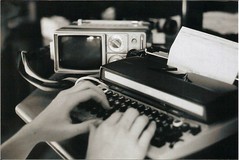
typewriter It's been a ripe old time since I've penned a post for The Freelance Writing Trenches series and, true confession, the very start of this post has been hanging out in draft form on the Blogger service since 5/29/2012. High time to dust it off and publish it already, don't you think?


I took a lot of great classes in college. During my four years of undergraduate work, I enjoyed course such as British Literature and Reading in French. I opt for an extremely liberal arts heavy higher education, taking "Logic" for my analytical reasoning gen ed and "Great Ideas of Science" for my science gen ed. (And yes, in that latter course we just sat around and talked about string theory and the butterfly effect.) Oh, it was all fun and games until the recession hit.

Looking back at my college transcript, my class choices hint at an individual preparing to spend her professional life steeping in academia. Except when you fast forward six years from my college days, I'm here, hanging out in a cabin in the woods, running multiple businesses. If there's one glaring hole in my college transcript, it's the utter lack of any business education whatsoever.

Business woman

I run a business every single day. On the flip side, (as much as it pains me to admit it), I only use the knowledge I learned from "Theatre: Greek to Elizabethan" a handful of times a year, usually when playing Trivial Pursuit. Being brutally practical, I use next to nothing that I learned from my college course in my everyday work. What I do draw upon is what I learned as news editor for my college's student newspaper and the time I spent sticking my toe into the world of freelance writing (researching markets, writing queries, etc.) during summer breaks.

It's not my college's fault that I followed my heart when choosing courses and a major path. After all, my college time was spent pre-recession and the prevailing attitude was that even if I veered off the course of higher education, I could always translate my liberal art skills (aka writing skills) into a cushy corporate job. Freelancing really wasn't considered a viable career path yet and my English professors, who had all gone the masters, Ph.D, teach college route, didn't have much insight to offer on any non-academic career path.

Still, I wish, that at some point someone would have said, "Hey bozo, go take some business classes."  In fact, I'd argue that it's almost more important for every college graduate to enter the world with at least one business course under their belt than an analytical reasoning or science course. The days of spending your summer breaks interning at a business that will offer you a job upon graduation are rapidly disappearing. Instead, our higher education institutions need to figure out a way for college graduates to thrive without the shelter of a corporate wing. For many of us that means going into business for ourselves. Because here's a secret that it took way too long for me to figure out about the adult world: it's all a business.

Writers like to think we have too much artistic integrity to worry our little heads about horrible, bland business details, but we don't get very far if we aren't capable of churning out polished, marketable product, whether we write poems or magazine feature articles. No matter if we make beautiful pottery or write short stories or fix plumbing problems, we need to let people know that we have these skills and then we need to convince people that they should consume these products and services from us. We're always selling something, even if we don't think we are.

To be successful writers, we need to know how to market ourselves and find consistent work; we need to ask for the payment we deserve; and we must be open to editorial criticism. Most importantly, we need to stop shirking away from any internal heebie-jeebies we get when we think of running our own businesses.

Wherever you are in the writing life at the moment, this year I challenge you to start thinking of your writing as a business. After all, your writing should work for you, not the other way around.

Interested in how to transform your writing into a business? Check out the rest of the posts in the Freelance Writing Trenches series to spark some ideas.

 
Read more ...

The Freelance Writing Trenches: Writers Behaving Badly

Wednesday, July 18, 2012
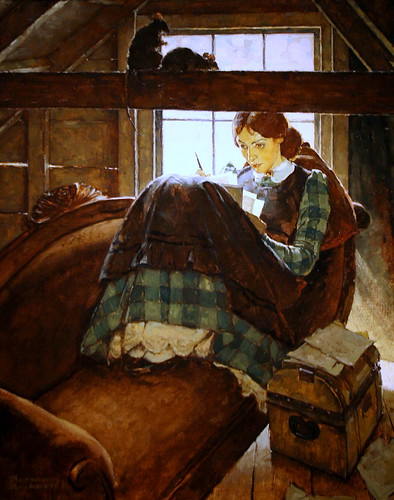
Jo Seated on the Old Sofa from "The Most Beloved American Writer"
I stumbled upon a travel article about the region where I live last week. I'd been keeping my eyes out for the article, since early this spring, before we'd even opened for the season, the writer had made a special visit to my work place for the article.

Because my work place is a fairly new travel destination, we often get freelance writers in and I've learned that the way I would do things if  I was writing the article and the way other writers approach the assignment can be drastically different. On at least two occasions, there have been writers who wrote articles about the place without even bothering to talk to anyone connected with it; the articles were basically 500-800 word laundry lists of what the museum contains. An article without quotes? Boring!

But I digress . . .

So the other day, I read this article that I knew was coming out and my jaw dropped. No mention of my work place, while sources who had ferried around the author (and family) for three days, were hardly mentioned. The author confused recent wildfire incidents. I felt a twinge of disappointment, then of annoyance, and finally, anger. In writing the article, the author had broken just about every unspoken rule of the freelance writer. 

Don't want to be a writer behaving badly? Just follow these three rules:

Rule #1 - Say What You Mean, Mean What You Say:

From the get-go, the author lead sources to believe the article would be published in a very well-known national publication. While not technically untrue, the article was actually destined for the website of a specialty spin-off of the well-known national magazine. Would sources have bent so far backwards for the author if they'd known the article wouldn't even be published in print? Probably not.

As a freelance writer, you don't always know what the fate of your article will be. Once you submit your article, the article's fate is in the hands of your editor who may print the article in another issue than previously agreed upon or the article may never be published at all. If you're writing on speculation, you don't even know if your article will ever be published. But if you are gracious and kind and a good steward of your source's time, they'll be happy to talk with you for an hour or so even if you aren't sure where the article will end up.

And you owe it to your sources to be honest about what you do know about the article's fate. The only thing you achieve by making grandiose promises you can't deliver on are bad feelings. While I'm not upset that my work place didn't get a shout-out in the article (hey, I get word constraints), I did find it odd that the entire area where I live only got about three teensy, weensy paragraphs in the article which were half filled with incorrect information. I do find it rude when you accept a three-night complimentary stay at local lodging and then hardly eek out three paragraphs about that location. 

Which brings us to rule #2  . . .


Rule #2 - There's No Such Thing As a Free Lunch Vacation:

As a freelance writer, you will get free things. I just finished reading a complimentary copy of a great book that I'll blog about later this week. I have no problem with receiving free items for review purposes, especially since most reviewers have disclosure policies they use when reviewing free product.

But size does matter.

If you are a travel writer, you may accept discounts, but you should not accept free lodging, meals, tours, etc. etc. If you want to write unbiased copy for masses, you've got to pay, just like the masses do. You can absolutely can not be in debt to your source. If you're working for a large publication, they'll be reimbursing your travel expenses anyway. That's what makes the travel writing gig so sweet.

Rule #3 -You're Not That Smart . . . Fact Check:

Confusing the locations of our many, (extremely) well publicized wildfire incidents is just plain sloppy. I suspect the author didn't send a draft out to the article to sources to fact check because the author knew sources might not be too pleased by the pithy coverage offered in the article. However, a simply Google search would have quickly pointed out the author's errors.

By the way, you certainly are not obligated to send sources a draft of your article. After all, you're supposed to have gotten the facts right the first go around. But having sources look over an article for accuracy is a great way to nip mistakes in the bud and save you the shame of the publication printing a correction to your article.

Moral of the story: be straight with your sources, don't take free things, and fact check your article. If you don't, you make the rest of us writers look bad. Don't be a writer behaving badly. Don't spoil everyone else's fun.

 
Read more ...

Good Night Nora

Wednesday, June 27, 2012
May 19, 1941 - June 26, 2012 

Good night Nora. Thank you for writing and directing funny, charming, sweet films that dared to "go there." Thank you for choosing a career and children. Thank you for growing older (but not old enough!) with grace and good humor. Thank you for being awesome.

Nora-isms: 

“I don't think any day is worth living without thinking about what you're going to eat next at all times.”

“Here are some questions I am constantly noodling over: Do you splurge or do you hoard? Do you live every day as if it's your last, or do you save your money on the chance you'll live twenty more years? Is life too short, or is it going to be too long? Do you work as hard as you can, or do you slow down to smell the roses? And where do carbohydrates fit into all this? Are we really all going to spend our last years avoiding bread, especially now that bread in American is so unbelievable delicious? And what about chocolate?”

“Above all, be the heroine of your life, not the victim.”


Read more ...

You Have No Idea: a book review

Thursday, May 3, 2012
I consider myself a fairly prolific reader. As an English major, I've read a considerable amount of the "classics" and I'll read just about any genre (fiction or non) as long as the story has a strong human interest angle. But when You Have No Idea, a biography of Vanessa Williams, with contributions from mom Helen and ghostwritten by Irene Zutell, arrived on my doorstep (literally - the UPS man dropped it off), I realized I've never read a celebrity biography or a ghostwritten book.

And of all the celebrity biographies to land in my lap, one on Vanessa Williams?

While I certainly recognized the name, I truly had no idea about her life. (Q: Didn't she sing that Pocahontas song? A: Yes, yes she did.) I never watched Ugly Betty and her real success on the Billboard chart came in the early 90s, when I was too young to be paying much attention to the top 40.

Don't expect lush, detailed descriptions in You Have No Idea. The book's writing is bare bones. Thoughts aren't always completely finished because, I'm assuming, Zutell just didn't have enough information from her interviews with Vanessa to write more than a sentence on certain topics.

Clunky narration aside, I found myself fascinated by Vanessa's life. (It's always interesting to find out what makes successful people tick, no?) The eldest child of a hard working, double income family, Vanessa grew up as a member of one of just two black families in her New York hometown. Her entire family was gifted musically and Vanessa's childhood goal was to mimic Meryl Streep's career path and become a Broadway star. But Vanessa's success took on a life of its own. A Miss America crown, a nude photos scandal, and babies were just a few of the curveballs thrown at her.

I found I could admire many things about Vanessa's life. I admired her down-to-earth upbringing.(Although, obviously Helen didn't do a great job with the birds and bee talk, since both of Vanessa's now-defunct marriages involved an unexpected bun in the oven.) I admired her ability to stick with her dreams, even as she juggled motherhood. (She's the mother of four.) But Vanessa isn't completely immune from acting like a slightly out of touch celebrity. When you read about her "necessary" home renovations, you'll have a good chuckle and eye roll.

The book is narrated almost completely from Vanessa's point of view, with brief interjections from Helen here and there. Helen's contributions lend a certain gossipy touch to the entire book that at times feel distracting and extraneous, but are often humorous and down to earth. Helen's own story of rising above an unhappy childhood is compelling enough that I almost wished the narrative had been split into two books: one for Helen and one for Vanessa.

Will I be picking up another celebrity biography any time soon? Probably not. But this was a fun, fluffy read that I really rather enjoyed.

Have you ever read a celebrity biography? You can learn more about You Have No Idea over at the BlogHer book club.

 
Disclosure: I participated in this review for the BlogHer Book Club. I was compensated for my time and received a complimentary copy of the book. However, all opinions expressed in the review are my own.
Read more ...

Book Review: Some Assembly Required

Friday, April 27, 2012
I've been a fan of Anne Lamott's since I first read her well-known writer handbook - Bird by Bird -- ten years ago. Since then, I've read one of Lamott's novels (Blue Shoe) and all of her faith memoirs. Her writing is cheeky, sincere and a little neurotic . . . aka, right up my alley.

But one book of Lamott's that I've avoided is her Operating Instructions, a memoir of her first year of motherhood. While I know mothers are wonderful, important creatures, I thought I'd hold out on Operating Instructions until amusing anecdotes about breastfeeding don't go straight over my head.

So why did I pick up the "sequel" to Operating Instructions - a memoir about Lamott's first grandchild, entitled Some Assembly Required? Well, for one thing, my mom loaned me her copy so I didn't have to track down a copy of my own. For another, I thought the book might have present a baby/adult relationship that I might relate with more than a motherhood memoir. (I mean, I love me some good baby time, but only as an objective third party.)  And lastly, don't we all have a teensy bit of morbid fascination about teen pregnancy?

That's right, Lamott's son Sam became a father at age 19.  Baby mama, Amy, was 20 when Lamott's grandson, Jax, was born in July 2009. Written in diary format, Some Assembly Required, follows Jax's first full year of life. The pages are filled with observations of Jax's development and growth, stories of Amy and Sam's tenuous (and failing) relationship and plenty of poopy diaper anecdotes.

While I'm sure the diary format worked well for Operating Instructions - you know, where Lamott was with her son Sam nearly every hour of every day -- the distance between grandma and baby seemed a little too great at times to make this intimate writing style really work. After all, Lamott really is just a third party (albeit, a very subjective one) in this baby's life and when she takes off for India in the middle of the book and then Europe towards the book's conclusion, the reader's left hanging, wondering "wasn't this book supposed to be about a baby?!?"

The book is less a journal of Jax's first year and more journal of Lamott's neuroses about Jax's parents during Jax's first year. Lamott does have a habit of dragging her clearly unhappy childhood, which she always manages to reference in a veil of ambiguity, into everything she writes and this memoir is no exception. As for her sobriety - that gets mentioned about once every page turn. For readers familiar with Lamott's previous works, Some Assembly Required will feel as though Lamott is processing the same ol' problems all over again, just a little less successfully this go-around.

Although the cover claims to be written with Sam Lamott (which I read in between the lines to mean "so struggling young adult Sam gets some royalty checks" but what do I know) the book is written almost completely from Lamott's point of view. I'd assumed that Lamott and Sam would alternate chapters or something, but the book contains only the following from Sam: an introduction, an essay, and occasional "interviews" with Sam about Jax's latest feats. Oh yeah, and there's the odd email from Amy included in the pages too. It's a veritable literary scrapbook of Jax's first year. 

Moral of the story: It's not Lamott's strongest work, the pieces never quite match up, but it is a tender book about learning to let go of controlling other people's lives and letting people make their own mistakes so that they might learn from them.

 
Read more ...

The Freelance Writing Trenches: Follow-Up guest post

Tuesday, April 17, 2012
 Note from Ada: Today's installment of The Freelance Writing Trenches comes from Robert Lillegard, a college classmate of mine, and one of the most successful 20-something freelance writers I know. Over the years, Robert and I have kept in touch about our freelance success and headaches and I've always admired Robert's tenacity. There's a lot we call all learn from Robert when it comes to having a successful freelance career. 

The Importance of Follow-Up
By Robert Lillegard

I’ve been freelancing for about six years, but I’ve really started taking it more seriously in the last two. I’ve sold stories to the New York Times, Midwest Living, Relish, Latina, and a couple of major trade journals. One of the biggest things that has helped me along the way is something my editor at my day job told me: the persistent get published.

The simplest way I can say it is this:

Pester editors until they get back to you. 

I’m the online editor for Duluth~Superior Magazine, and I periodically get pitches for stories, emails from potential interns, etc. There are a few things I look for in those emails. I appreciate it when people get my name right. I appreciate it when people give off the impression that they have read our magazine—they don’t have to actually have read it, but they have to sound like they have (hint: this doesn’t mean saying “as I was reading your magazine, I noticed that you could use more articles”. It’s more like “Your Sojourn section has done stories on Bayfield and Ashland, but you haven’t yet covered Ely.”) And, I appreciate it when they send me polite follow-up emails checking if I’ve had a chance to look over their query yet.

Ok, appreciate is the wrong word. Frankly, those follow-up emails are pretty annoying, because they mean more work for me. But you know what? Half the time they’re the only emails I respond to. I’ll ignore the original email but after a follow up or two I basically always respond. There are a few reasons for this (for example, following up shows me a writer can be diligent, which makes a good impression) but the main one is this: it keeps the writer at the top of my mind. I’ll eventually write back, if only to say “no”, because that person took the effort to keep working on me.

The Lesson: Follow-up is key.

So, I apply this to my own writing as well. I track every query I send out with an Excel spreadsheet that has the date, subject of the query, the publication, and the editor’s name. If that sounds like a lot of work, come on—doesn’t it take you at least an hour to write a query? Even pitching a nearly identical query to a competing publication takes at least 10 minutes just to track down the editor’s name and email. So an additional 45 seconds to update your query log is really no big deal.

But, here’s where the query log is key. Make 5 extra columns and label them First Follow-Up, Second Follow-Up, Third Follow-Up, Fourth Follow-Up, and Phone Call. Then, send out your queries and wait. When no one gets back to you after two weeks, forward the editor your original query and at the top add something along these lines:  

Dear Mr. Morton, 

Just wanted to follow up with you about my story pitch on kayaking in the buff. I think it would be a perfect fit for the Give it a Try section of Naked Sports Magazine. Is this something you’d be interested in? 
Best, Frankie Freelancer

(You wouldn’t actually say Frankie Freelancer though, you’d say your name).

Then, under the First Follow-Up column, write the date you followed up. Continue the process, varying your follow-up emails just slightly, every couple of weeks until you hear back. If you keep not hearing back, give a polite phone call a try.

 Some places won’t ever get back to you. But if your queries are good and you’re targeting the right markets, this should really improve your response rate. I had to follow up with one magazine something like eight or nine times, but now I have a monthly column with them and I get a feature basically every month, too. Plus, of course, there’s the New York Times, which I try to mention at least twice every time I write something about writing. Whether you’re pulling $50 an article or $1 a word (or both if you write really short articles), following up persistently will help you get to the next level in your writing career.
Read more ...

Book Review: Born Wicked

Thursday, April 5, 2012
As a teenager, even before the sweeping Harry Potter phenomenon, I always gravitated toward fantasy literature. As a result, the book shelf in my childhood bedroom is stuffed full of tomes by Tamara Pierce, Patricia Wrede, Jane Yolen, and, of course, J.K. Rowling. If it has witches, wizards, and dragons in it, I'm all over it.
   
So I was pretty excited when my copy of Born Wicked by Jessica Spotswood, arrived.

This debut young adult novel follows the tumultuous journey of 16-year-old protagonist, Cate Cahill, to adulthood. Since her mother's death, Cate's taken on the responsibility of mothering her two younger sisters, a task that would be difficult even if the three weren't witches. The family lives in New England at the turn of the 20th century, but for some, yet to be explained reason, the Cahills' world is drastically different than the world historically was at that time. New England is ruled by a heavy-handed religious authority, the Brotherhood. When young women reach age 17, they must either marry or join the female religious order, the Sisterhood. Being a witch in this world means imprisonment . . . or worse.

This first book of the Cahill Witch Chronicles (a trilogy) holds all the elements you might expect in a YA fantasy novel. There's a prophecy, danger, a love triangle, and an overbearing governess. The dialogue moves along at a snappy pace and although I felt that Spotswood was guilty of holding back a little too much "illuminating" information in the book's beginning, despite the ambiguous start, I did come to like the main characters quite a bit.  

One of the most confusing things about the book to me was why the book is set in a drastically altered "real world." India and Dubai are mentioned in the book, but it's clear that New England is cut off from the rest of the United States, if there even is a United States in Cate's world. New London (Connecticut?) is the commerce hub in the books, rather than Boston, which seems like the obvious choice. I'm sure Spotswood has her reasons, but it's not explained at all in the first book and unless she plans to turn the books into a deep and remarkable commentary on world politics, I'd have preferred she'd set the story in a whole new made-up world. Some of the most compelling arguments I've heard again communism and racism were set in novels with completely imagined realities.

Born Wicked certainly doesn't have the depth of say, Philip Pullman's Golden Compass books and I'm not sure it will have the broad appeal of the Twilight series. (Although, having never read the Twilight books, I can say for sure.) But it's a rollicking quick read with loveable characters and I'll probably pick up the next books to see just how things end up for Cate and Co, especially since this first book ended on a cliffhanger.

And when I say cliffhanger, I mean cliffhanger. 

You can join in the conversation about Born Wicked over at the BlogHer Book Club.


Disclosure: I participated in this review for the BlogHer Book Club. I was compensated for my time and received a complimentary copy of the book. However, all opinions expressed in the review are my own.
Read more ...

Saturday Outtakes

Saturday, March 31, 2012
It's been one of those week's where I'm tempted to tell you that nothing happened. But if nothing happened this weekend, then why am I sitting on the couch this Saturday morning feeling like I've been run over by a truck? I spent the last two days in town at a radio production workshop and between that and a dinner out last night to celebrate one of Andy's coworker's last day, this hermity introvert is beat.

But, but, not only was the workshop an excellent opportunity for testing out my new Smartpen, it was a great workshop. (What a nice change from my other recent attempts at continuing education!) The instructors were sweet and nurturing, but also not afraid to challenge and push the small group of 10. The workshop focused primarily on creating radio features and all that talking about interviewing, editing, and script-building just reinforces my belief that it's time for me to get out of management. Somehow . . .

After two weeks of June-like weather, we've had a return of typical northern Minnesota spring weather.   But before things got really cold and grey, Andy and I tromped back on a very overgrown, obstructed trail that's being reopened on the grounds of the museum where I work. The trail's flagged all the way to its destination (Blueberry Hill, pictured below, which has a panoramic view of the surrounding area), but between a blowdown storm in 1999, a wildfire in 2007, and absolutely no maintenance work for nearly 15 years, a lot of work needs to be done before the trail can be opened to the public. So if you're knacky with a chainsaw, let me know.
Last weekend I announced plans to finish not one, but two pairs of socks. Here both pairs are in all their glory:
 
 
What's the next  knitting project? Knitting up and felting a pair of clog slippers to replace these bad boys:
 
Not that those slippers need to be replaced. Lots of life in them yet . . . *cough*

I don't think I'll be hopping in the freshly open lake anytime soon, but we've had a couple of "neighbors" testing out the chilly water: 
Otter
Muskrat?
Sprouts keep popping up. Since we did get two inches of snow on Thursday night, Andy did bring our little pot of lettuce sprouts inside. They seem a little happier inside than battling 30 degree weather outside. 
Kohlrabi, broccoli, basil, flowers and more poking up in the seedling greenhouse
And as if that wasn't enough awesomeness for one week, check out this announcement:  

I've been hearing rumors of an Anchorman sequel since early 2008 and as someone who wore out her Anchorman DVD, I am pumped!

Happy weekend!
 
Read more ...

The Freelance Writing Trenches: Tools and Gadgets

Thursday, March 22, 2012
I like writing because it's low-tech. Technically, all you need to call yourself a writer is something to write with, something to write on, and a bit of imagination.There's something simple and elegant about needing nothing more than a pen and pad of paper to go about your daily work.

But in classic, "If you a give a mouse a cookie (then he'll want a glass of milk)" style, if you want to be a freelance writer, you'll need a few more items at your disposal beyond a notebook and pen. I know, I know. Rude.

While writers are notorious tech-phobes and pretty staunchly opposed to change  -- why else do we writers make a big fuss about self-publishing and ebooks? -- if you're want to compete in the 21st century writing markets, you're going to have to keep up with the times to a certain extent. The other day I read a freelance writing article (which I now can't find to link up) that said something along the lines of "Sure, you can not have a computer and be a freelance writer, but see how well that goes when someone says 'email that to me' and the best you can do is crumble up a piece of paper and throw it across the room." 

Here's my low-tech list of the bare necessities you'll need as a freelance writer:
(I bet you have most or all of these already.) 
  • A computer, preferably a laptop, that isn't terrible prone to the "blue screen of death."
  • A word processing program - Microsoft Word seems to be what most editors use.
  • An internet connection - for your email, website, and social media platform
  • Email - for contacting editors and submitting pieces 
  • A phone - for interviews
  • An invoicing system - like Quickbooks
  • A decent camera - you'll greatly increase your earning potential if you can provide decent photos with your articles. I just have basic Canon point and shoot camera which works well enough for what I need it to do, but I'd like to save up for a DSLR camera to up the quality of my photos a little bit. 
If you want to get all fancy, you could get printer too. I have a printer/scanner/copier combo which I use to print out contracts, scan clips for my portfolio, and, well, make copies. And don't forget to have a good amount of office supplies laid in: pens, notebooks, printing paper, ink, Post-Its, etc.

While I'm a fan of keeping it simple, I have to admit my arsenal of freelance writing tools got a little high-tech recently when I was given a Livescribe Echo Smartpen.
What's a Smartpen? It's a pen with a built-in recording device that works with special dotted paper. At the bottom of each page of Smartpen paper is a set of controls. To record audio with the pen, you just turn the pen on and with the tip of your pen, tap the record control at the bottom of the paper. The pen records until you hit the stop control and during the recording session you can scribble notes on the paper.

After you're finished recording, you can tap any of the notes you wrote during the recording and the pen will starting playing the audio that was recorded at the exact time you wrote the note. You can load all of the recordings onto your computer and computer program even captures a digital image of the page you wrote on during the recording.   The pen is a little bulky, but that's easily overlooked since the pen is basically magic.

My dad discovered the Smartpen when he read James Fallow's review of it in The Atlantic back in 2009  and what's good enough for James Fallows is good enough for this hard-hitting rural journalist. Although I do the majority of my interviews over the phone, this little pen will be a great aid when I do in-person interviews. I simply can't take notes as quickly as people talk and as a result, the quotes I use in most of my articles are pretty heavily edited by my memory.

While to date, I've stayed true to the general gist of what a person said in my article quotations, it's been extremely difficult to do a true word for word quotation unless you've recorded the interview, which I'm pretty psyched about my new Smartpen. No need to futz around trying to find the spot like I'd have to if I'd use a tape recorder or digital recorder to capture the interview audio; with the Smartpen I can just write something like "interesting" or "important" on the page when the interviewee says something meaningful and when I'm back in my office I just tap the word I wrote on the page and bingo, the audio starts playing right to the quote I wanted to use in the article.

The pen charges by being hooked up to a computer USB port and the battery and memory should be able to hand a full day of recording. Since most of the interviews I do are only about an hour long, that's plenty of recording time for me!

A writer really needs very few tools and gadgets to success. But sometimes, something as simple as just getting a little more high-tech about that pad of paper and pen we're using can make our low-tech careers   just a little easier.

Do you have any must have writing tools?
 

 Disclosure: I was in no way compensated for my review of the Livescribe Echo Smartpen. I'm just an enthusiastic consumer excited to have found a product that makes my writing life more efficient! 
Read more ...

The Freelance Writing Trenches: Business or Pleasure?

Friday, March 16, 2012
I had an epiphany early this week. As freelance job after freelance job snapped into place, I realized that if I had to, I could probably make this freelancing thing work on a full-time basis. It might not be pretty a lot of the time, but it would work . . . if it had to.

You see, at the end of last month, money was feeling a little tight. So I decided to stop letting that line on my weekly to-do list - "3 queries" - not go unchecked yet another week. I sent out three queries to publications I'd previously worked with and I got a thumbs up on all of three queries. Then, wonder of wonders, some of the articles that I'd gotten through those queries lead to more paying opportunities and suddenly I was riding a wave of freelance jobs and opportunities.

Obviously, things aren't always like this - for every lucrative writing month like this one, there'll be an equal, if not greater, dry spell when it comes to writing gigs.

That's okay.

I keep my day job to see me through those dry spells. But sometimes, it feels that I spent far too much time tangled up in the safety net that is my day job. Often I feel the day job holding me back rather than merely keeping me on my feet and I wonder what would happen if I simply left it behind me.

This week, I realized, things would probably be okay sans day job. I'm just not willing to sit around and let ends not meet. Over the last few weeks, I've proven than I can fairly easily step up my earning potential when needs be.

Which brings me to the point of this post. . . .

Money

My writing has turned into a business. Sure, I write because, as Sylvia Plath said "there's a voice within me that will not be still." But sometimes, I think it's bills rather than artistic vision that keeps that voice within chattering away. I write to get paid. 

The farther down the freelance writing road I go, the more imperative it becomes that I get paid for my words. I hate to think I wouldn't write if I didn't get paid for it, but at this point in my life, I have limited amounts of time every day and I need to invest my time carefully for the best payout. Heck, even the blog's monetized a just enough to get it to pay for its annual domain renewal.

But as an English major, someone who raised to see writing as more of an art form than a livelihood, all this talk of monetizing feels, well, a little yucky. Shouldn't writers just be happy to be writing and creating? I truly enjoy the vast majority of freelance writing gigs I take, but there's also a thrill in knowing I'm being paid a certain word rate to research and write. Does that mean I've sold out? 

Case in point . . . . A couple years back, I started doing a bi-weekly commentary for the local radio station. (You can link to it up above "Of Woods and Words On Air".) At the time, I was just starting to seriously pursue freelance writing. I didn't have many paying gigs and I happily started writing and recording the commentary for free because it seems like good writing practice and great platform building.

But lately the commentary has become a pain in my B-U-T-T. Between writing and recording the commentary, I probably spend about 2.5 hours every two weeks on the commentary, not to mention the two-hour round trip to the studio to record it and the hassle of reserving a studio, etc. In the past year, the writing for the commentary's gone flat. I feel constantly at a loss for topics. It's easy to wonder if it's really worth it.

It seems to me I have two options with the commentary at this point, (well, three, if you consider sucking it up and continuing to record it on biweekly basis) each equally shallow:

Option 1) Ditch the commentary. Shallow because, really, I'm going to ditch an obligation because it doesn't pay me?  But, but, I'm also perceptually stuck for ideas and it seems like the writing gets worse and worse as the weeks go by.  Is it good business, even if I'm not getting paid, to stick my name on writing I'm not particularly proud of?

Option 2) Attempt to monetize the commentary. Continue to do the commentary for free for the local station, but either syndicate or find a paying market for each commentary. Shallow, obviously, since apparently the only way I find value in my writing is if I'm getting paid for it. On the other hand, getting paid for writing really  does increase the value of the writing to me, which in turn should mean that the writing in the commentaries would improve.

*sigh*

They say it always boils down to money and I suppose that's true, even for dreamy, impractical writers. But as much as I delight in my freelance writing business success, it's sad to watch writing for pleasure disappear from my life, at least for the time being.

Have you ever had a hobby turn into business? Any tips for maintaining a business while remaining artistically true to yourself?

Read more ...
Related Posts with Thumbnails