Showing posts with label freelance. Show all posts

The Work From Home Shift

Monday, November 18, 2013
Blogger ate my Monday post. Here it is now.

Alternative post title: If it takes me 6 hours to knit a mitten . . .

I've basically spent my entire adult life believing that I need more hours in the day. I've always overcommitted (I have a problem saying "no") and far too many evenings, I've heaved a great big sigh and thought, "If only I'd managed to get X, Y, and Z done today."

Lately I've been realizing just how much of my life revolves around unrealistic expectations and guilt. It's not a fun way to live, you guys. It really, really needs to stop.

You see, the thing is, that I always think I should be doing more. I should be making more money, writing more, exercising more, cleaning more, being more giving of my time. That's where the magical thinking about, "If only there were more hours in the day" comes in.

Because I work from home and most people do not, I tend to believe that if I am to be accepted by the outside world, I need to work eight hours day at my desk, just like everyone else. Good God, I wouldn't want to look lazy, would I? If I spend an hour out of what is technically my eight hour day starting a batch of bread or cleaning the bathroom, the guilt starts to seep in. "Real people" do not clean their bathroom on workdays, I think to myself.    

Happily, I think I might be developing some methods to finally let all that heavy, mucky guilt go.

The first thing that happened was my friend Rose introduced me to Leonie Dawson last week (this post specifically) and I keep going back and reading and re-reading Leonie's 15 hour work week post over. It makes so much sense to me and feels like just the affirmation I needed. When we focus on doing instead of working it's amazing what we can accomplish. Although I'm sure you are an excellent employee, chances are you could accomplish everything you get done in a 40 hour work week in your outside of home job in a  20-25 hour work from home schedule. That's just the way things are.  

For example, in my early days of being homeschooled, (gosh, I really should be pretty good at this "work from home" thing by now) we tended to have 3-4 hour school days. That is, we managed to accomplish everything you would have done in a normal 7-8 hour school day before lunch. How? There was no walking down the hall from classroom to classroom. No wasted time when you were done with your work and had to wait 15-30 minutes for all the rest of your classmates to finish up. The same thing goes when you work from home. You can let go of expectations about how long something should take you and focus on the finished result instead. (Also, no meetings!) If you accomplish everything you need to do in a day, who cares if it took you eight hours or not? 

The secret to these condensed school and work days is focus and tuning out distractions.

I just love this quote about focus from Leonie's post: 

Great,” I hear you saying. “I know, I know, I’m supposed to focus. Seriously, that’s like the most overused productivity word ever.”
 
To which I say “That’s nice, but are you fucking doing it?”

I'm making "are you fucking doing it?" my mantra for the week and we'll just see what happens to my productivity. (Good things, I hope.)

Stop me if this sounds familiar, but here's what's been happening when I sit down to "work" lately. I get everything cued up to go. And then suddenly I have an urge to open up approximately 6-7 tabs in my internet browser. I check my stats on Etsy. I read a few blog posts.All of these thoughts start rushing through Am I thirsty? Am I hungry? Do I need a cup of tea? Should I go to the bathroom? Maybe I should research a designer for a new blog design. Did I get around to those social media posts I've been meaning to do? Then I go back to my blog post and find a blank screen and a blinking cursor.

When you work with that level of focus, let me tell you, sunset comes around pretty darn fast. 

I've been spending all of this time thinking I ought to act like I was working when in fact, I was really just posing as someone working. There's another mantra I like to pull out at times like these when productivity starts to take on sort of mythical elements: "Would you pay yourself for what you're doing right now?"

I got another big nudge towards focus and productivity last week when I committed to knitting five pairs of mittens for bridesmaids at a wedding the second weekend in December. It takes me approximately 6 hours to knit a single mitten, so that's pretty easy math: 10 mittens at 6 hours each = 60 hours of knit time. The mittens need to be shipped by December 1 to give them enough shipping "wiggle room" to arrive on time so that means between Saturday (when the yarn for the mittens arrived) and December 1st, I need to find 60 hours of knit time along with keeping up with all the rest of my work commitments.

At first such a task seemed impossible, ridiculous, "what was I thinking?", etc. etc. And then I realized, if I let go of the social media surfing and the other mindless time wasters, 60 hours in the span of 15 days isn't so bad. That's just 4 hours of knitting a day and I don't ever get any work (other than knitting) done between the hours of 4 - 10 p.m. anyway. If I stay on task, everything will get done just as it should be. In fact, the first pair of mittens are already done.    

Focus on the end product. FOCUS. Wring more out of the hours you have and stop wishing you had more of them. Let the guilt go and enjoy what you get done. 

 
Read more ...

What December Will Bring

Saturday, December 1, 2012
Oh hey there December and holiday season! While it's been pretty obvious for a while that the year has been wrapping itself up, I'm always surprised when we reach the sunset of another year. It's always like, "Christmas? Again?!"

For whatever reason, this year I've heard a bit about the concept of  passive income. You know, like when you own a rental house. Although I generally give passive income the side-eye since passive income is dependent on having the necessary capital to purchase something that would actually generate money, it's hard to dislike the idea.

Right now, we're in the best financial state we ever been in since reaching adulthood, but that is the result of a lot (a lot) of active income. November and April are normally tied for "blah-est" months in the North woods, but last month was a whirlwind of to-do lists and special projects. While the layout of my days are quite different now that I'm done with the full time, out of the house job for the season, last month I was surprised to find that I don't really have any more free time now that I'm working for home. So if  November was any indicator, this month will not be a gentle and quiet end to 2012.

Here's what's on the docket for December 2012:

  • Write a bunch of freelance articles. Hmmm, may have said "yes" to a few too many assignments this months.  
  • Interviews. So many interviews for my radio documentary project. Followed by transcribing. So much transcribing. 
  • Other contracted work. Oh yeah, that. 
  • Finish making this year's batch of venison sausage. We had a bit of meat grinder drama-drama last month that delayed this process -aka, the first meat grinder we bought was totally and absolutely defective. Now we're the proud owners of a 1/2 horsepower Cabela's meat grinder which runs like a champ. We've made 16 lbs of venison sausage this week and will be making some wild rice sausage and chorizo very soon.


  • Let the Etsy shop simmer for the month and focus my crafty/knitty energy on finishing up some personal knitting projects, including piecing together this lovely Aran knit afghan. I only knit four of these squares (the dark green ones), the rest were made by the crafting group for a recently married crafter.
  • Spend quality time with friends and family who I haven't seen for far too long. While the pounding pavement that accompanies the holiday season can make me weary, I really do look forward to the opportunity to re-connect with some of my favorite people. 
  • Find the perfect Christmas tree. Last year's tree was pretty darn perfect, so we'll see how we do. 
  • Christmas baking, Christmas cards, wrapping presents, White Elephant gifts, oh my! 
 What are your plans this December? What are you looking forward to this holiday season?

 
Read more ...

Stability vs. Taking Chances

Monday, October 15, 2012
I know you've been wondering. You've been thinking to yourself, Ada's summer season is wrapping up just about now, isn't it? Doesn't she usually post something about this time each year where she bitches and moans about how hard seasonal work is, worries about her finances, feels guilty about her lack of creativity over the summer, and in general decides that being an adult is tricky business? The answer is YES(!) and I know you've been wondering where that post is for year 2012. 

Well, wonder no more, because here you go!

Errr, or not.

Although I'm none too happy that the weather has turned grey and cold (why yes, I have worn long underwear to work all this week) and that snow no longer seems far off, I'm actually pretty content with the direction my life will take when I finish up with my seasonal full-time work on Sunday. There's much to look forward to as I transition into the winter season: more time for my personal business ventures of freelance writing and Etsy, season tickets to Broadway Across America (starting with Beauty and the Beast this Wednesday!), crafting weekends and other get-togethers, and a trip to Ireland in April that's almost completely saved up for. I'm rather pleased.


Although I have a hard time admitting it to myself, part of this contentment and security that I'm experiencing is because I am thisclose to accepting a two-year, salaried contract with my current employer. Over the past few Octobers, while I've been ecstatic to transition into my work-from-home portion of the year, I've been plagued by fears that I'm playing it safe, not trying hard enough, stuck at the end of a dead-end road, etc. etc. I've always felt that I have to take a big scary leap into the unknown to really prove myself. I've worried that if I'm not taking huge chances, then I'm not really living the life I imagined.

Then I remember that I'm a go with the flow sort of gal and that the closest I've come to a "life plan" is some hazy idea that maybe I'd sit in an East Coast cubicle as a magazine editor and that maybe I'd like to be married and start having children when I was 27. Since I'm remarkable wrong on both those counts, I think, at long last, it's time to release those hazy imaginings of yesteryear. Things aren't going the way I thought they would, but doesn't make things bad.

So I am not going to quit my day job because:
I like travel and the occasional dinner out
I'm a fan of health insurance
I enjoy being able to save for an exciting place known as "The Future!"
I still learn helpful things from the job and there's room for creativity and innovation
Despite the emotional tug of war that comes from running a business that's not truly your own, I'm the boss. Yup, I am.

You know, financial security is nothing to be sniffed at. Whenever I think that I'm not being very brave or that I'm not true to myself by sticking with this here day job, I remember that I gain more and more freelance clients every year and I've even managed to turn my knitting hobby into a teeny little business that keeps me in yarn money. How am I not being true to myself if I'm consistently carving out time in my life for things that make me happy without falling into a financial tailspin? Isn't that all any of us really want?

There's dissonance between what I think I should want from life and what I really want. If I'm being honest, all I really want is self sufficiency.

I don't need a fancy job. I don't need letters behind (or in front of) my name. I don't need a big house.

I want to be my own boss. Make my own food. Travel when I want. Have the financial security to feel unlimited and secure. Really, I've made fantastic strides towards all of those things in the last few years.

So I'm going to going to take a chance on stability and stop looking at it as being "stuck." Instead, I'll focus on all the doors that have opened and continue to be opened by sticking it out in my current situation.And I'll let change slowly seep into my life.

At this moment I don't feel pushed to take some bold, big move. It's enough to know that I have bold, big moves inside me. Moves I can pull out when the time for taking chances is just right.
 
Read more ...

Searching for 'Whelmed'

Wednesday, July 11, 2012
Chastity: I know you can be overwhelmed, and you can be underwhelmed, but can you ever just be whelmed?
Bianca: I think you can in Europe.
- 10 Things I Hate About You 

I've been on the lookout for "whelmed" lately. I'm trying to prove that you don't have to go to Europe to find it. On the other hand, a little European adventure right about now might be the perfect escape . . . .

The thing is, I've been feeling a little overwhelmed lately. While I know this is always the busiest time of the year in our household, I seemed blessed with seasonal amnesia and over the course of winter, I forget just how manic things can get at high summer. These days, just when I feel like I've gotten my arms wrapped around everything again, another shoe drops.

Bars need to be made for the neighborhood potluck (which I didn't attend because by this time in the summer I hate all people . . .joking . . . erm) . . .

Or the garden suddenly looks awfully thirsty . . .
Or I have a board meeting on my day off, followed by an interview for a freelance article, which means I don't get to town on my day off to do laundry and pick up groceries until after 4 in the afternoon.

Too many of the brief hours I spend in bed each night have been spent tossing and turning - worrying about how I'm going to get everything done the next day. On Monday morning, I realized enough was enough. I emailed one of my freelance editors and asked him to reassign one of my articles for the month. I've been a  reliable, hard working freelancer for this company on a monthly basis for nearly three full years, but I needed a (temporary) break.  I needed to go find whelmed.

Where does one find whelmed?

The berry patch is a good place to started. I picked my first two quarts of the season yesterday morning. Then yesterday afternoon, as though I hadn't proven my hunter-gather skills enough, Andy and I went out in the boat and I ended up landing a 21-inch whitefish. (Not what we were fishing for, but a welcome surprise.)
(My mom said she just loves dead fish pictures [sarcasm], so the photo above is for her. Forgive the crazy eyes and dopey, tourist-y hat. I'm trying to avoid sunburn this summer, which explains the hat, if not the eyes.) 

I think we can all agree that the last thing I need is another proverbial fish to fry, but an actual, physical fish to fry was pretty darn tasty and helpful in my quest for "life balance."

After a tasty dinner of fish, Andy headed off for training, I spent some quality time with the garden, fertilizing and watering at my own pace, enjoying the twilight and letting tomorrow worry about itself.

Where do you do to find "whelmed"

Read more ...

The Freelance Writing Trenches: Follow-Up guest post

Tuesday, April 17, 2012
 Note from Ada: Today's installment of The Freelance Writing Trenches comes from Robert Lillegard, a college classmate of mine, and one of the most successful 20-something freelance writers I know. Over the years, Robert and I have kept in touch about our freelance success and headaches and I've always admired Robert's tenacity. There's a lot we call all learn from Robert when it comes to having a successful freelance career. 

The Importance of Follow-Up
By Robert Lillegard

I’ve been freelancing for about six years, but I’ve really started taking it more seriously in the last two. I’ve sold stories to the New York Times, Midwest Living, Relish, Latina, and a couple of major trade journals. One of the biggest things that has helped me along the way is something my editor at my day job told me: the persistent get published.

The simplest way I can say it is this:

Pester editors until they get back to you. 

I’m the online editor for Duluth~Superior Magazine, and I periodically get pitches for stories, emails from potential interns, etc. There are a few things I look for in those emails. I appreciate it when people get my name right. I appreciate it when people give off the impression that they have read our magazine—they don’t have to actually have read it, but they have to sound like they have (hint: this doesn’t mean saying “as I was reading your magazine, I noticed that you could use more articles”. It’s more like “Your Sojourn section has done stories on Bayfield and Ashland, but you haven’t yet covered Ely.”) And, I appreciate it when they send me polite follow-up emails checking if I’ve had a chance to look over their query yet.

Ok, appreciate is the wrong word. Frankly, those follow-up emails are pretty annoying, because they mean more work for me. But you know what? Half the time they’re the only emails I respond to. I’ll ignore the original email but after a follow up or two I basically always respond. There are a few reasons for this (for example, following up shows me a writer can be diligent, which makes a good impression) but the main one is this: it keeps the writer at the top of my mind. I’ll eventually write back, if only to say “no”, because that person took the effort to keep working on me.

The Lesson: Follow-up is key.

So, I apply this to my own writing as well. I track every query I send out with an Excel spreadsheet that has the date, subject of the query, the publication, and the editor’s name. If that sounds like a lot of work, come on—doesn’t it take you at least an hour to write a query? Even pitching a nearly identical query to a competing publication takes at least 10 minutes just to track down the editor’s name and email. So an additional 45 seconds to update your query log is really no big deal.

But, here’s where the query log is key. Make 5 extra columns and label them First Follow-Up, Second Follow-Up, Third Follow-Up, Fourth Follow-Up, and Phone Call. Then, send out your queries and wait. When no one gets back to you after two weeks, forward the editor your original query and at the top add something along these lines:  

Dear Mr. Morton, 

Just wanted to follow up with you about my story pitch on kayaking in the buff. I think it would be a perfect fit for the Give it a Try section of Naked Sports Magazine. Is this something you’d be interested in? 
Best, Frankie Freelancer

(You wouldn’t actually say Frankie Freelancer though, you’d say your name).

Then, under the First Follow-Up column, write the date you followed up. Continue the process, varying your follow-up emails just slightly, every couple of weeks until you hear back. If you keep not hearing back, give a polite phone call a try.

 Some places won’t ever get back to you. But if your queries are good and you’re targeting the right markets, this should really improve your response rate. I had to follow up with one magazine something like eight or nine times, but now I have a monthly column with them and I get a feature basically every month, too. Plus, of course, there’s the New York Times, which I try to mention at least twice every time I write something about writing. Whether you’re pulling $50 an article or $1 a word (or both if you write really short articles), following up persistently will help you get to the next level in your writing career.
Read more ...

The Freelance Writing Trenches: Network

Tuesday, April 10, 2012
You should be networking as a freelance writer. You really should. What with it being the era of social media and all, you really have no excuse.

You know. it's funny. As a girl who has reached her (gasp) late 20s, I've watched my Facebook feed evolve drastically over the last seven years. What started out as a random assortment of mostly amusing postings from classmates at my alma mater has now been overtaken by applications, postings from my friends' moms, and pictures of the babies of the people I haven't talked to in years. Connections that seemed so vital back in the day end up looking almost superficial after a few years and miles are between the two of you.

When I'm in a hasty mentality, I'll poo-poo Facebook as silly and unnecessary. But when I'm in a more objective mood, I can see that Facebook has allowed me to stay in touch with some very important people.

The thing is, when I originally "friended" them, oh, six or seven years ago, I knew I'd probably never them again after graduation. (And I haven't.)  I never imagined they'd be so important. But the mere fact that we've all pursued freelance writing and been able to keep in touch through the wonder of social media has made these individuals indispensable contacts.

You hear on any career building website how important it is to network. In fact, the word "network" kind of makes me glaze over. But I do think it behooves freelancers greatly, no matter where they're at with their careers, to stay in touch with fellow professionals who are following in similar footsteps.

Here's three reasons why:

Companionship:
Freelancing is lonely business. Sure, you'll get out of the house for an in-person interview every now and then, but most of your work is done through phone calls and emails. What's more, if you're a freelancer, you probably get this a lot when you explain the whole query/write for pay process: "Wow . . . that's . . . so . . . interesting. I didn't know you could do that." When you have someone you can contact who understands how you make your living (and not just in the "oh, good for you" way), you feel a little more legitimate and a lot less prone to spontaneously bursting out into a heart-wrenching version of "All By Myself." 

Competition:
If I wasn't passive aggressive, I'd call this reason "accountability" but the truth of the matter is, I like winning. (Maybe that's why Andy refuses to play cribbage with me anymore?) But when you're self-employed, there's no such thing as raises and promotions. Without any external forces pushing you to work harder, it can be easy to fall into the trap of thinking "hey, there was enough money to pay for groceries this month, who needs more than that?" But when you send off an update to one of your writer friends and they reply by telling you that they recently broke into the New York Times, you're presented with one of those "now wait a minute , , ," moments where you realize if they can do it, there's no reason why you can't either.  

Collaboration 
When you stay in touch with other freelance writers, you have an opportunity to share your experiences, yes, but also your contacts. Success in freelance writing depends to a certain extent on having an "in" with an editor. Most of that time, you're depending on a great story idea to land you a gig, but every once in a while, you'll get tipped off about a particular publication by another writer.  I've landed more than one job from a lead I got just from checking in with a fellow freelancing colleague. Classic scratch my back and I'll scratch yours. 

I don't have any specific formula to my networking, although I will say my most helpful networking has been with people who are in a similar stage of their freelance writing career as me. Still, there's value in networking with people who are just starting out (you will learn something just by answering their questions) as well as those who have reach that pinnacle of success you aim for. Many people recommend networking once a week. I find once a month is more attainable for me and enough to keep me on track with my goals.

Moral of the story: keep in touch. Shoot a writer you admire an email. Send a college classmate who's gone into a similar career a Facebook or Twitter message. You never know what doors might open as a result of your correspondence.

 
Read more ...

The Freelance Writing Trenches: Consistency

Monday, April 2, 2012
Did I ever tell you that I procrastinate?

I didn't?

I'm sure I've been meaning to tell you that. I just, you know, haven't gotten around to it yet.

That's right. Not only am I "Judge-y McJudgerson," I procrastinate. All the time. (I'd say I really am more than just a lovely bundle of faults, but really, are any of us beyond just being a lovely bundle of faults? Really?)


I crave organization and schedules. I want color-coded day planners. I want to know that at 7:45 each morning I will be sitting down with my breakfast to check emails and that I will start my work day promptly at 8 each morning and that at 12:30 . . .

But the truth is: I'm hot or cold. Some weeks it's like someone started a fire under my bum and I bask in the glory of my own production. Other weeks. . . . Well, other weeks I bask in the glory of Facebook and Pinterest.

Source: google.com via Eric on Pinterest

BTW, what is up with that quote? Apparently I need to figure out a way to get to a living wage out of Facebook and Pinterest . . . .

Sometimes I imagine what would happen if I was actually consistent and could take those crazy productive weeks and those not so inspiring weeks and mix them all together to create a slow but steady pace for the year's 52 weeks. I imagine projects would be completed in advance of deadlines, clutter would diminish, and my blood pressure would lower. But I've never been able to maintain a carefully regimented schedule. I'm easily distracted (ooo, shiny!) and I'm not sure I'm capable of writing without a dose of stressful adrenaline that bubbles through my veins when I flip the day planner page and find a row of little deadlines staring straight back at me.

Still, some nice things would come from having a more consistent schedule and work ethic. It would mean that when an editor sends me a deadline reminder and I email back saying I'm nearly done with those stories that I'd really meant that I was nearly done with the stories not that, I'm thinking about maybe giving the sources for the story a call this afternoon. It would mean that I wouldn't being doing phone interviews at 7 and 8 tonight because I  would have done them ahead of time. But sadly, that's just not the case.

So here's to procrastination and the production it inspires . . . eventually.

 
Read more ...

The Freelance Writing Trenches: Getting Started

Sunday, February 5, 2012
I spent a lot of time in my advisor’s and other professors’ offices during my college career, never more so than during the close of my senior year. Wedged between their book-lined walls, I chatted up my professors, mulling over my next move. Grad school? An attempt to grasp an elusive and rapidly disappearing 9-5 writing job with benefits?

As obtaining my B.A. (a double major in English and Communication) grew closer and closer, I realized that after four years in the idyllic hallways of Tower Hall (a building nicknamed “Hogwarts” for its striking Gothic architecture), I was as clueless about what came after college as I had been when I hiked up the four flights of stairs to my very first college class.

Well, maybe not quite as clueless.

During my college years, in addition to working towards my degree, I’d spent three years writing for and two years as news editor of the student newspaper. I’d spent four years working for and two year editing the college’s literary and artistic journal. I’d develop my writing skills and knew I wanted a career in writing. Yet, the summer between my junior and senior year, I’d lost an opportunity for an internship with a small city newspaper because the publication became unable to fund the position. 2007 was not a great year to immerge into the world as a young woman with a love of print media and an English degree.

Of course, there was one option that would allow me to write and earn an, albeit, meager living after college. I wouldn’t have benefits, but I also wouldn’t have to go through the heartbreak of having every single writing job I applied for be defunded before they even finished the hiring process.(True story.) But I never discussed that option with my professors. It seemed too ridiculous. Who graduates from college wanting to be a freelance writer?

A friend emailed over the weekend to ask how exactly you get started as a freelance writer. I had to pause for a moment and think about how I began, because honestly, I’ve been kicking around the freelance writing thing since I was in high school.

So how do you approach dipping your toe in freelance writing? If I were to do it in a linear manner, here's what I'd recommend.

1) Get a consistent writing gig where you write for someone else. Don’t worry about getting paid for this gig. Your job here is to learn the joy of deadlines and experience some times eye roll-inducing interactions with editors. If you’ve worked on a school newspaper, helped edit a newsletter or journal, or anything of this nature, you can probably skip this step. I spent several years, both in high school and college, writing and editing for the online teen ezine kiwibox.com. Yes, kiwibox. It sounds ridiculous, but during that time I wrote literally 100+ articles and edited just as many. It was truly invaluable experience, no matter how silly it sounds now.

2) Amass your resources. I believe every would-be freelance writer should have a subscription to some writing magazine (I got Writer’s Digest), a subscription to Hope Clark’s e-newsletter Funds for Writers, and the latest version of Writer’s Market.

Got those? Good – immediately proceed to step 3. It’s just too tempting to use resources as a diversion from the actual freelance writing work.

3) Start pursuing paid gigs through queries and submissions. I started querying on an extremely fair weather basis during the summer of 2005. I got a couple nibbles, but no bites. I did however learn how to write a decent query letter. I sold my first article in 2008. Then another one in 2009. Then I got a regular writing gig. It's not a fast process, but just like driving home in the fog with one headlight, it'll get you there.

There is no (I repeat, no!) magic process you must follow to become a freelance writer. But there are two things you must do if you’re serious about making money as a writer:
  • Pursue publications for paid writing possibilities.
  • Write. 
Simple?

We wish!


Read more ...

The Freelance Writing Trenches: Get Organized

Monday, January 30, 2012
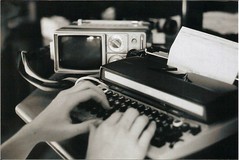
typewriter Freelance writing isn't exactly rocket science. Honest.

No matter how daunting the query system may appear, freelance writing is simply a perpetual game of cat and mouse between you and various publications.

Boiled down, the freelance system looks like this:
1) You pitch a job.
2) You get the job. (Or you don't, in which case, return to step 1)
3) You complete and submit the job.
4) Job is accepted and publication is scheduled
5) Upon publication, you get paid.
6) Rinse and repeat.

The only teensy, weensy issue with the above system is that you're hopefully going to have multiple jobs at various stages in the above system all the time. Suddenly things aren't so linear.

That's where a freelancer organization system comes in.

Using the freelancer organization system, let's revisit the freelancing system.

1) You pitch a job. (Record in your pitch log.)
2) You get the job. (Record in your pitch log.)
3) You complete and submit the job. (Record in your submission log)
4) Job is accepted and publication is scheduled. (Create and submit invoice)
5) Upon publication, you get paid. (Record payment in submission log or using your accounting software.)

I use basic Excel spreadsheets for my pitch and submission logs*. Because I'm a nice person, here are downloadable templates of the spreadsheets I use to organize my freelance writing jobs:

Pitch Log 
Submission Log

I find these have all the columns I need but you can tweak the templates however you like. I'm not a stickler for filling in every column either - for example, if it seems irrelevant to fill in the publication's physical address, I just leave it blank.

I use the pitch log quite faithfully because it keeps me accountable and also prevents me for duplicating queries, which would be mighty embarrassing. You'll notice at the very far right column, I have a spot where you record alternative publications where you might pitch the same idea. It's always good to have a contingency plan in case your first choice market doesn't bite. If it's an idea you're sold on, pitch it until you have a nibble!

If I'm being honest, in the excitement of actually getting a job, I often fail to record the job in the submission log. Instead, the submission log is normally where I record any submissions to literary magazines. If I was going to be super organized, I would create a second sheet in the submission log devoted for pieces that are either submitted "on spec" or are submissions to literary magazines.(What's "on spec?" Click here!) That way one page would be devoted to awarded jobs and another page would be devoted to submissions of fully written pieces to publications for consideration (just a pitch with a finished product, really.) Use the submission log however you like.

When I'm ready to invoice, I use QuickBooks because I have all of my finances running through the program. However, you can create your own invoice system easily using an invoice template and your submission log. Be sure to save each unique invoice somewhere on your computer. Record both the date you submitted the invoice and the date you expect to be paid by in the submission log. Upon payment receipt, record the date in the submission log and somehow mark the invoice as paid. If payment hasn't appeared by the follow-up date, it's time to send another invoice. 


*Spreadsheets are both adapted from examples from full-time freelancer Devon Ellington.
Read more ...

The Freelance Writing Trenches: Query Away

Monday, January 23, 2012
The morning started with a county-wide power outage. By the time the power was back up, it was snowing and it hasn't stopped yet. As the hours tick by, the snow's intensity grows. Currently, the far shore of the lake and even the ice house in the middle of lake have disappeared in asnowy whiteout. It seems like a good day to spend in front of the wood stove, drinking cocoa and planning next year's garden.
But as much as the wood stove beckons, after running my latest batch of receipts through QuickBooks, it appears that my time would be better spent sending some queries out. Time to up the income levels at Of Woods and Words!
Oh queries. A pain in the arse really. Yet without the query letter, where would any of us freelance writers of be?

There may be editors out there just dying to give you some work, but unless you specifically and articulately ask for that work, they're going to give the work to another writer who they already know exists. The query letter is our chance to both announce and prove ourselves. When starting out, query letters often seem like time-consuming missives sent off into the ether, but you really do need to query if you want paying gigs. The more you query, the more writing credentials you earn and with more writing credentials, the greater success you'll achieve with your query letters.

Moral of the story: just send out some query letters already!

Even though I now have a much higher rate of success with my query letters then when I started out three years ago, the truth is I don't query as much as I should. I find it easy to get overwhelmed by the process, even though I've done it many times.

Here's the basic process of how to write a query letter:

1) Research the publication you'd like to query.
2) Determine if the publication's a good fit for your writing. Be honest about this. Trying to get a square peg into a round hole really is a waste of time.
3) Come up with a brilliant article idea for the publication. Make sure this idea is fairly original and truly a fit for the publication. (You don't want to come off like Hugh Grant in Notting Hill, interviewing Julia Roberts for Horse and Hound.) You'll also need to check the archives to make sure the magazine hasn't recently published something similar.
4) Carefully outline your article idea. This means you need to use specifics - who you plan to interview, how you plan to organize the article, etc. Sell yourself as the best person to do the job by listing your credentials and highlighting anything else that might make you an especially good choice for writing this particular article. 
5) Submit - making sure you've addressed everything to the appropriate editor, have a completely error-free letter/email that make it sound like you actually know what you're talking about.

There are many, many how-to books devoted to the subject of query letters. My favorite remains Michael Perry's Handbook to Freelance Writing.


On average, a good query letter should take you at least an hour to complete. It's time consuming, which is why I like to procrastinate with them.

Happy querying!
Read more ...

2012: A Freelancer's Fiscal Resolutions

Monday, January 2, 2012
The finished product
As I sat in the back bedroom on New Year's Eve, smoothing out tissue paper, folding it up, and piling it in a box for use during next year's holiday season, it seemed like a good time to make some fiscal resolutions for 2012.

Don't get me wrong, although I am the anal person who opens her presents by carefully lifting up each piece of tape on the package to minimize wrapping paper damage, things are not so tight around here that I iron wrapping paper for reuse. (I only do that if the paper's real cute.)

However, I am cheap enough to see no point in piling all the tissue paper into the recycling bin, when there's absolutely no reason why I can't use it again next year. It's just going to get all crumpled up again when it gets used: who cares about a few wrinkles?


Kind of like how Scarlett O'Hara shoves a dirty turnip into her mouth and melodramatically proclaims, "I'll never be hungry again" at the end of Gone with the Wind, I sat there smoothing out the tissue paper and thought, please 2012, allow me to smooth tissue paper not out of necessity but because I abhor unnecessary waste.

Here's how am I resolving to make it through 2012 without feeling like a poor person:

1) Christmas Fund 
Every December, I have that "reach for the paper bag and hyperventilate" moment when I realize I have extremely limited funds to figure out lovely, meaningful presents that don't look cheap. To prevent this horrifying experience from repeating itself in 2012, each week in 2012, I'm setting aside $10 into a Christmas fund. By December, I'll have nearly $500 saved up for Christmas presents and related expenses (i.e. tissue paper) - more than enough to cover everyone on my gift checklist. 

2) Freelance pay check percentages 
I've been making my way through Joseph D'Agnese and Denise Kiernan's  The Money Book for Freelancers, Part-Timers, and the Self-Employed. The book does a great job of charting out a system for freelancers to manage their sporadic payments. One of the key ideas pushed in the book is to take each incoming payment and immediately take out a set percent for taxes (taxed income does have its perks!), retirement and the emergency account. I'll be putting that method into practice for all of my freelance checks this year so those funds are used more effectively and thoughtfully, rather than just throwing the payments at whichever bill is most in need at the moment of receipt.

3) Invoice tardy clients 
I have a regular client who pays me whenever they feel like it. Whenever they feel like it is usually months after my work's been published - around the time when I've forgotten what I wrote and what I'm owed, actually. This method is stressful and also makes it difficult for me to catch discrepancies. Now that I have all my financials running through QuickBooks, this client's totally getting invoices. At least one of us can be on top of things that way. 

Do you have plans to make 2012 a less stressful financial year?
Read more ...

On Being Calm

Thursday, December 15, 2011
Things have been hectic around here lately. Here's part of the reason for the slight madness: my Star Trib article which went live online yesterday afternoon and is in today's paper in the Taste section. Check it out; even if my fish lineage is kind of shady as one commenter so kindly pointed out.

I've just survived another deadline week. Actually, it was more like a deadline fortnight this go 'round. But I can't fall into my usual post-deadline protocol. (Aka, slack off until the next assignments roll in.) While I did sigh a big sigh of relief when the last assignment went flying out of my outbox yesterday morning, there's still plenty to do  I'm headed out of town next week for the holidays and won't be back for a week and a half. That long absence means blog posts and commentaries need to be written ahead of time and some work hours need to be banked.

I'm often told how calm I look. I'm not quite sure where this misinterpretation springs from, but you know the whole thing about not judging a book by its front cover. I think that's what's going on here.

I may look serene on the outside (Really? Really?) but inside I'm more often than not a pile of nerves. I like to put my head down on my pillow at night and stew for a good half hour on all the things I need to get done. I think it's a family trait. Perhaps because we're a rather quiet bunch (at least when in public) we're mistaken for being cool, calm and collected. Only we know we're really stressed out nut jobs with high blood pressure issues.

So while it is a weight off my shoulders to have those articles written and invoices in the mail (Maybe there will be Christmas in Whoville after all. . .;) the fact that I no longer have deadlines hovering over my head like a piano means I can turn my scrambling thoughts to such things as: actually buying Christmas presents, putting up the decorations, packing, and maybe writing one blog post this month that's filled with coherent thoughts. (Haha.) 

Maybe, just maybe, one of these days, I'll feel . . . calm: cool, calm, and collected.

I'll get back to you in January on that.

Anyone else tasting that holiday stress yet?
Read more ...

Ding-Dong Merrily

Wednesday, December 7, 2011
There's eggnog in the fridge and a Christmas card on the shelf. 
There are presents in the making and budgets to be kept. 
Yet despite the cold, the darkness and the snow,
this Advent season is quickly ticking by and I've nothing to show. 

Lately, the blogosphere has been filled with merry posts about holiday decorating, holiday baking, and kids in Santa hats. It's lovely and it's fun, but it's making me feel like this:


Because this is how far I've got with my holiday decorating so far:
1) Open closet door
2) Pull down holiday decoration container
3) Shut closet door.
4) Open container.
5) Throw autumn/Halloween decorations into container.
6) Walk away.

And mind you, this happened a week ago. I have not walked back yet. The container is still sitting there in the corner, although I did move it farther out of sight this morning so I'd stop feeling so guilty about it.

It was pretty common place during my childhood for our Christmas tree and decorations to go up the day after Thanksgiving. However, Andy prefers we wait a little longer than that and considering the finite amount of space in the cabin and  my finite tolerance for Christmas trees weeping balsam needles all over the floor, the wait makes sense. So maybe a tree this weekend. Maybe.

To be honest, things are kind of a beautiful disaster at the moment. I'm up to my ears in deadlines and freelance projects. The house is such a disgusting pit that we try to intercept any visitors (namely, the UPS man) on the deck before they can catch a glimpse inside. We are still processing that frackin' deer.  (Don't worry, it's been frozen, we're just in the midst of round 2 of the sausage making.)

And my attempt to call off Christmas? Foiled. Foiled completely, my friends. After making my very mature and very important announcements that I was not doing presents nor Christmas cards this year, (Sorry guys. Sorry USPS) Andy started dogearing catalogs (I'm taking creative license with this fact) and then just this evening suggested that perhaps we should . . . send Christmas cards this year.

I'm off to get myself one strong glass of eggnog . . .  

Read more ...

This is hard!

Wednesday, November 16, 2011
I spent this past Sunday afternoon catching up with two old friends. Although we all live within a two-hour radius of each other, it seems our paths rarely cross. We're all busy doing our own thing and once in a blue moon, we pause to take a few hours and catch each other up on life and all its happenings.

One's married and having her first baby in less than a month's time. The other's still figuring out what exactly her post-college life will hold, what direction her career will take, and how a relationship might figure into all of those big questions. Then there's me. I have a stable relationship and, for the most part, a stable life, but I live at the ends of the earth and as Andy so nicely put it a couple weeks back when I was bemoaning where all my money disappears to: "Ada, you don't have a spending problem, you have an income problem."

We're all at different stages of our young lives, but we all shared a common consensus: this is hard!

A bloggy friend, Amanda, just launched her first e-book, The Grad Meets World Ultimate Guide to the First Year Out of College. The book's jam packed with all sorts of things I would have liked to have known during that first year out of college and it got me thinking. When I graduated back in the stone ages of 2007, I'd decided on taking a gap year and waiting out a tempestuous job market. (Surprise: it got worse!) But I found even when I decided I was done with the transient gap year, my transient days were anything but behind me.  Now, nearly five years out of college, I have yet to have a 40 h/w, 52 w/y, we pay for health insurance and sock away some that paycheck for your retirement sort of job. 

And I'm okay with this. I'm proud to have made as much progress as I have with my freelance writing and I'm happy to have a day job that keeps me in groceries, if not total sanity. Still, it's hard not to sometimes feel like there might be something else out there, lurking just out of reach, the golden key if you will to worry-free living.

Just this evening I was watching the Sex and the City episode where Trey turns to Charlotte and says, "I'm 43. When does it start being easy?"

As the three of us talked on Sunday afternoon, it became apparent, no matter what path you choose, it's no smooth sailing at age 25 and 26. And if Trey says it's still hard at 43, I think I'll believe him, even if he is a doofus. Heck, I beat it's still downright rough at 92. 

But then again, if it weren't difficult, things just might get a little dull.So here's to perseverance and holding our own during all life dishes out. No one ever said it was going to be easy. That's just a silly notion we all seem to pick up sometime during our undergraduate years.

Read more ...

A Truthful, Toothful, Tuesday Post

Tuesday, November 15, 2011
I'm going to take a cue from a friend who frequently adopts the list format for her blog posts to save time. When you make lists, you don't have to worry about completing your thoughts or making a point. And since I'm back at the cabin, at least for the time being and am woefully behind on all sorts of stuff, here's what's been going on lately . . . in list form.

1) You guys! Did you know that Thanksgiving is a mere 9 days away? What the what? How did this happen?! I'm going to have to bake pumpkin pies next week already.


2) It's Andy's birthday today!

To celebrate, I made him a bourbon molasses pecan pie from the latest Better Homes and Gardens. As soon as I took the pie out of the oven, I realized I'd forgotten the vanilla.

It's official: I can not make birthday treats without forgetting some crucial ingredient. However, I feel Andy's pecan pie will fair better without vanilla than Dad's pumpkin pie did without sugar. . . maybe. 

3) It's also deadline day. (Note the lack of exclamation points on that statement.)

The big article I was worrying about a couple weeks is due today, but I actually sent it a week ago: I just had to get a cd of accompanying photos for the article in the mail today. I feel pretty calm about the whole thing. 

However, today's also deadline day for the publication I write for monthly. I have more flexibility with this deadline and luckily all of those articles are under control. I still have about an article and a half to write before I call it a day though.  

4) Our internet is finally back!!

I'd love to tell you how helpful the internet provider was in the whole ordeal, but the truth is, after multiple calls to tech support and customer support, the person who actually fixed it doesn't even work for the company. It was a frustrating two weeks, to say the least, but like Ma Ingalls used to say: "All's well that ends well."

5) I have teeth again!

See:
Last Monday, the dentist reglued my veneer on. On Wednesday I decided to eat a frozen cookie. Needless to say, the reglued veneer did not stay cemented in place for very long. So it was back to the dentist's yesterday where they put a permanent coating on my tooth. Grand total of the tooth ordeal = $200.  However, they suckered me into scheduling a cleaning, so they haven't quite finished milking my bank accounts yet and Christmas is still a no-go around these parts since I'll be subsidizing the dental office employees' Christmas celebrations rather than my own this year. 

5) In answer to the deer questions from the last post, the deer is absolutely not hanging anywhere in the cabin. Did I say cabin? I didn't, didn't I. Shed. I meant shed. The deer's out in the shed. I will admit I forgot it was in there on Saturday when I head out to the shed to grab some gardening supplies and I was very startled to find that I wasn't alone out there!

6) So many chores to take care of before winter's here in earnest. Last bit of firewood to split and stack; a ton of venison to butcher, process, and freezer; the dock and boat still need to come out; and all on top of the normal money making business of every day.

Read more ...

Rage Against the Word Count

Thursday, November 3, 2011
I’m going to admit something that may make me sound like an overachieving priss. Back in college, when assigned 750 word papers (it could be expected you’d be writing two or three of these per English course) I consistently turned in 1000 - 1500 word papers. I never felt I could make my point in 750 words, so I just kept writing until I ran out of things to say.

Did the papers need to be twice their assigned length? Probably not. Given enough time with a red editing pen, no doubt I could have slashed out hundreds of extra words, removed redundant points and turned in a tight 750 paper. But since my papers, regardless of their length, more often than not earned “A”s, trimming the papers seemed like a waste of time. Professors may have gotten more than they’d asked for with my ridiculously long papers (for one 10-page paper assignment, I turned in 18 pages), but I got exactly what I wanted.

In hindsight, it probably would have behooved the professors to dock me points for my lengthy papers. Certainly, I successfully answered the question asked in the assignment, but my blatant disregard of the paper’s word limit really meant I hadn’t completed the paper in the manner in which it had been assigned. I would have raged against any professor who suggested I might cut my paper, (“But I can’t make my point in less than 1300 words!”) but truth of it is: they would have been right and I would have been wrong.

As it is, I’ve had to curb my verbosity all by my lonesome. Long-windedness is an indulgence; one that most freelance writers don’t get to experience.

If I turned in a 1500 word article for a 750 word assignment these days, my editors would have a shit-fit. In freelance writing, I’m given a word count because that’s literally all there’s room for in the publication. Even if the writing isn’t for a print publication, the writing still must be concise because you can’t expect to hold people’s attention for much more than 500 words on the web.

Right now I’m working on a 1000 word article for a publication with the largest circulation I’ve ever written for. It’s also my highest paying market to date. As exciting as it is, there’s just one little rub: I have enough material to write a solid 2500 word article.

In the past couple days I’ve been trying to cram every possible point I want to make for the article into the confines of 1000 words. I’ve cut and cut and cut. I’ve reworded sections and reorganized points. It feels not dissimilar to shoving just one more clown into the car.


I’ll get this sucker down to 1000 words if it’s the last thing I do. I have no choice. Regardless of when I run out of things to say, I run out of words at the 1000 mark.


Read more ...

Moving Mountains: Together

Tuesday, October 25, 2011
You think this is hard? I'm passing a gallstone as we speak! *That's* hard!
- Sue Sylvester

There's another reason I keep fairly mum about my freelancing. Usually, when I try to explain how I make my (albeit: supplemental) income, I get one of two reactions.  Reaction 1) Person has no idea what freelance writing is. Acts like you're the cleverest thing since sliced bread. Reaction 2) The doubt niggling at the corners of the person's smile and they proceed to explain how hard it is to make it as a writer.

Neither reaction is really preferable, although it is nice to feel clever for a bit, even if the feeling's fleeting. But I feel particularly uncomfortable when someone tells me I've chosen a difficult way to make a living. Because really, I don't feel like I've chosen a more difficult way than anyone else. With the decaying traditional job market, I'm not sure there is such a thing as a secure job anymore, especially if you're a 20-something.

It can be trying to hear from someone retired or close to retirement tell you how hard your life is. (Know what's hard? Listening to people tell you how hard your life is.) Although we're all in this less than stellar economy together, there seems to be a certain disconnect amongst older Americans about what work possibilities really lie out there for young Americans. The work world they knew, the one that was secure, doesn't exist anymore.

If you're a 20-something out in the world right now, chances are you didn't you just fall into a traditional 9-5 job, you know, the kind that provides health insurance and retirement options, right after college.  Or if you did, words like "layoffs" and "downsizing" are enough to make your stomach turn on a regular basis.

I know I'm anything but alone when it comes to working to make a living in an unconventional manner. There are so many people out there going beyond the 9-5 hustle to make a more satisfying living. People like Ashley who quit her day job and now make her living with her crafts. Or Amanda, who like me, works a full-time job, but has a freelance writing "side hustle." (By the way, if you haven't checked out my guest post over at Amanda's blog, Grad Meets World, you should check it out now!)  Or Carissa, a photographer and jeweler.  

So when someone acts like I'm doing something extraordinary,  a part of me wants to say: You're the one putting the proverbial mountain in here. We 20-something freelancers aren't really out to prove anything, we're just trying to live a comfortable, fulfilling life.

Sure it's hard. But there's one thing that makes it easier: we're all in it together, 


And we're up to the challenge.

Read more ...

Things I Wish I'd Known Before Freelancing

Monday, October 24, 2011
A friend recently reached out on her blog for some advice on starting freelance writing. It got me thinking.

write you a song
I've been dabbling with freelance writing since I was a college sophomore. In those early days, freelance writing was something I dipped my toes into each summer. It wasn't until a year or so after graduating that I actually waded in. The deeper I wade, the more I've learn, and some of what I've learned sure would have been nice to know while I was still sitting on the shore.


1) It's Never Too Early To Think of Taxes 

Maybe I've been dabbling in the freelance writing world too long, because boy was I surprised last year when my freelance earnings last year bypassed what the IRS considers hobby earnings and had to be claimed on my tax return. I'm only grossing a couple thousand dollars annually, so I don't bother to pay quarterly taxes yet.However, your life will be infinitely easier come tax time if you've actually spend the year acting like you'll be making oodles of writing money that the IRS'll want to know about.

You should:
  • File a W-9 with every freelance writing job contract.    
  • Track your mileage on freelance assignments. 
  • Keep all your receipts for office supplies and other freelance writing related purchases. 
  • Hold on to those thank you letter from any charitable donation you've made over the year. (Despite being poor I do make a couple of those every year.) 
2) The Books Will Help . . . to a Certain Extent 

There are all sorts of writing books out there. Some will provide you with helpful insight you'll return to again and again. Others, you won't even finish. You've heard this hundreds of times by now, but no book has the power to transform you into a freelance writer. Time and perseverance are the only fail proof ways I know of to become a freelance writer.

That said, there are a couple books, I think every beginning freelance writer should have on their bookshelf, or, even better, their desk:

 
You should also purchase, or at least subscribe to the online listing of the current year's Writer's Market. The book is the definitive listing of literary agents, small presses, trade markets, literary markets, magazines, and contests. If you have no idea where to start submitting your writing, this 1000+ page puppy will give you so many possibilities your head'll spinning after 15 minutes of leafing through its listings.


As you become more comfortable with the query process, you'll become less dependent on this massive tome. While I haven't bought the book for a couple years, I'm extremely grateful for both the advice Writer's Market gives on how to query probably and the eye-opener the book was about how much possibility still exists in the print world.

3) Query Thoughtfully

It's very easy to read through the paragraph descriptions of a publication in Writer's Market's listings and think "Oh my goodness, that one piece I wrote would be perfect for this magazine. I'm going to query them immediately." Hold. Your. Horses.

There's a little rule when it comes to querying. A rule that says you should be familiar with the publication before you query them with an article. Luckily, in this internet age, you don't necessarily need to head down to the library to leaf through back issues. A couple minutes spent poking around on a publication's website should give you a pretty good idea of whether or not your writing would be a good fit. It's also a good idea to do a search of the publication's website to see if they've published anything recently on the topic you'll be querying about. Chances are pretty good that about half the time "that perfect match" of a publication won't be at all what you thought.You're not necessarily wasting an editor's time by sending in an ill-fitting query  . . . you're wasting someone way more important's time: yours!

4) Your Queries Aren't Just Another Drop in the Ocean

It's really easy to get down on the query process. If I can use an ice fishing analogy, sometimes it feel like you're going ice fishing on a fish-less lake. You spend all this time crafting the perfect query, you send it off and then you wait, and wait, and wait. Most publications won't tell you they're not interested; after a certain point, you can assume you won't be hearing back. That said, you should never give up hope completely on a query unless you've heard a definitive "no" back on it. I've gotten assignments out of queries more than a year after I sent out the query, which, to me, makes the whole process worthwhile.

However, if you want more instant gratification (and less pay), pursue online freelance writing opportunities which are more prevalent than traditional print ones.

5) Recognize Writing As A Part of Your Life

Write daily. Figure out a process for getting queries out on a regular basis. Find other writers to hobnob with, both on and off-line. Subscribe to a writing magazine. (I get Writer's Digest although, I've heard better things about Poets and Writers.) Look into continuing education possibilities. If you only have time to read on writing publication a week, subscribe to C. Hope Clark's Funds for Writers e-newsletter. That lady knows what she's talking about.

6) It will take a lot of time

If you want to be a freelance writer, you need patience. Lots and lots of patience. Because, you guessed it, if you're spending years waiting for people to respond to your queries, making it as a freelance writer is one of those "slow but steady" sort of things.

One of the best things I did when I was getting serious about making a living as a writer was analyze the local writing market for opportunities Now I have a regular (paying) gig writing features for a small monthly publication and I write a biweekly commentary for the local radio, which does not earn me pay, but sometimes results in awards.

How about you? Is there a newsletter for a local nonprofit you could help with? A small monthly magazine that you could be come a regular contributor to? 

Start small and build as you go. In the process, you'll hone your writing chops and build a portfolio.

Read more ...

Going in Circles

Friday, October 21, 2011
Earlier this month, I wrote about the cyclical nature of seasonal employment. Despite realizing that switching between two jobs and lifestyles each year is a process not dissimilar to going through the complete cycle of grief biannually, this go-around, I'm having trouble adjusting. When I mentioned how odd I was finding this fall's transition back to working from home, my friend Sarah pointed out that this might just be because there's nothing "new" about the transition. 

While this was my second summer at the museum, I'm used to my summers repeating themselves. It's what I've done in the winter that's been different every single year since I graduated college. This is the first time in a long time that my life has completely repeated itself over the course of an entire year. I'm literally going in circles.

This is not a bad thing. But it's a little disorienting.

"Didn't I just go past that rock last October?"

Granted, the museum's only just closed on Sunday and this is actually my first "normal workday" morning that I've spent at home. Still, some things have changed around here. For instance, just yesterday morning I had a desk.

(Granted, it's not really my desk. For one thing it's a table. For another, it actually belongs to Andy's mother.)

Now? Not so much.


Let's look closer at what's going on here. What once contained some houseplants, reference books, notebooks, stationary and a laptop, suddenly sprouted a desktop computer, a ginormous printer/scanner/copier, and many, many more piles of, um, "files" yesterday afternoon. 

While I've complained about my less than tidy desk before, it's really the winter months when desk space is most at a premium around here. Because during the off-season I work a few hours a week for the historical society that operates the museum, I end up adopting several pieces of office equipment on a seasonal basis for a couple reasons: 1) so it doesn't freeze in the museum 2) to avoid spending half my day transferring files.

There are about a gazillion things I could spend this first morning working from home doing. But something tells me, if I don't get this clutter straightened out, I'll spend the day going in circles. And while, I might feel fine about going in circles annually, during a work day "going in circles" is really just code for "spinning your wheels."

Can you work in clutter? What do you do to make transitions easier?

Read more ...
Related Posts with Thumbnails